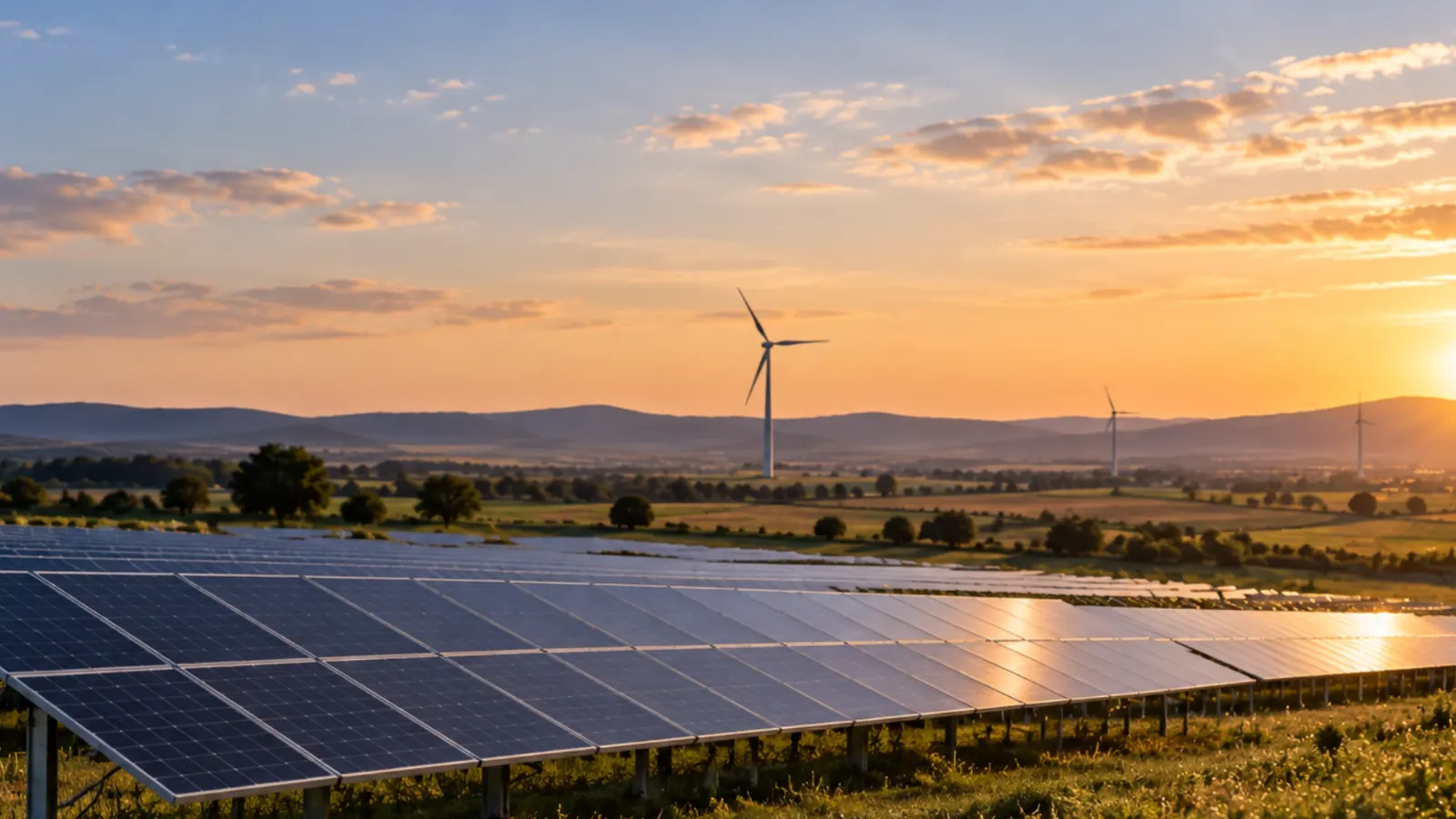
Romania remains an attractive market for renewable energy investments, particularly in solar, onshore wind and energy storage projects. However, developing or acquiring a renewable energy project requires careful coordination between land rights, urban planning and construction requirements, grid connection, environmental permitting and ANRE authorisation.
Recent legislative changes, including Romania’s new planning and construction framework and the introduction of a competitive grid capacity allocation mechanism from 2026, make early-stage legal due diligence increasingly important for investors.
1. Securing land for renewable energy investments
Under Romania’s Code on Spatial Planning, Urban Planning and Construction, which entered into force in August 2026, renewable energy projects qualify as engineering works, as they constitute energy infrastructure.
This classification is relevant to the permitting process. In particular, an urban planning certificate for engineering works may be requested and issued without the applicant holding a principal right in rem over the relevant land. Consequently, a renewable energy project developer is not required to own the project land or hold a right of superficies (drept de superficie) at the time the urban planning certificate is obtained.
However, before construction works can be carried out, the developer must secure the land rights required for the issuance and implementation of the building permit.
Before securing a site, investors should check not only the title deed and any encumbrances, but also the cadastral status, the category of use and the agricultural regime of the land, access rights, planning restrictions, and the possibility of using the land for both the project and the infrastructure necessary to connect it to the grid.
Acquiring and securing rights over the land is also covered on our real estate, construction and infrastructure page.
2. Agricultural land outside built-up areas
Numerous renewable energy projects in Romania are developed on agricultural land located in rural areas. Law no. 18/1991 establishes a specific regime that allows, subject to the fulfillment of the conditions provided by law, the development on certain categories of agricultural land of capacities for the production of solar and wind energy, of electricity storage units, of transformation stations and of the related infrastructure, generally within the legal limit of 50 hectares.
Development of the project may require the permanent or temporary removal of the relevant area from agricultural use.
Romanian legislation also allows, in certain situations, the dual use of agricultural land, both for agricultural activities and for the production of electricity from renewable sources. This regime can allow only the area actually occupied by the energy infrastructure to be removed from agricultural use, while the remaining area continues to be used for agricultural purposes.
3. Grid connection and Technical Connection Permit (Aviz Tehnic de Racordare – ATR)
Grid connection is increasingly becoming one of the main development risks for renewable energy projects in Romania.
The general procedure is regulated by the ANRE Regulation approved by Order no. 59/2013, as subsequently amended and supplemented. This generally involves submitting the application for connection, determining the connection solution, issuing the Technical Connection Permit (ATR), concluding the connection contract, installing and commissioning the connection facilities, and finally issuing the connection certificate.
The ATR establishes the technical conditions under which the project can be connected to the public electricity grid.
Therefore, for investors purchasing a project, the mere existence of an ATR is not sufficient. Due diligence should also analyse its validity, the approved capacity, the connection point, the grid reinforcement works, costs, guarantees, and implementation deadlines.
For energy storage projects, grid connection must be assessed separately for withdrawal and injection. We cover these aspects in our guide to BESS projects in Romania.
4. The New Grid Capacity Allocation Mechanism
A particularly important development for investors is the introduction of the grid capacity allocation mechanism for relevant projects with an installed capacity of at least 5 MW, applicable from 1 January 2026.
According to the methodology approved by ANRE Order No. 53/2024, the available capacity of the network for projects falling within its scope of application is allocated through a competitive mechanism.
This means that access to network capacity must currently be treated as a key investment risk, and not just as a technical issue related to the approval process.
Investors should determine at an early stage whether the project falls under the capacity allocation mechanism and analyse the available capacity, the status of the allocation process, the applicable payments and financial guarantees, the connection timeline, as well as the consequences of failing to meet the mandatory development milestones.
This aspect is particularly relevant when acquiring projects presented as “ready-to-build” or at an advanced stage of development: land rights and permits have limited value if the project does not have a viable and legally secure grid connection solution.
5. ANRE authorisation and licensing
Grid connection is distinct from the authorisation and licensing regime administered by the Romanian Energy Regulatory Authority (ANRE).
According to Law no. 123/2012, projects exceeding the threshold laid down by law require an establishment authorisation, while projects falling under the statutory exemption are subject to the applicable notification regime.
Commercial operation of the generation facility is subsequently subject to the applicable ANRE licensing requirements.
Investors should therefore ensure that the land, construction, grid connection and ANRE authorisation processes are coordinated, as delays or changes in any one of these processes may affect the validity or timing of the others.
6. Environmental Permitting
Renewable energy projects are subject to Romanian environmental protection legislation, which implements the relevant requirements of European Union law.
Depending on the location, size and characteristics of the project, the competent environmental protection authority may require an environmental impact assessment, an appropriate assessment in relation to Natura 2000 sites and/or an assessment of the impact on water bodies.
Depending on the location, additional permits and approvals may be required, including in relation to protected areas, archaeological heritage, water management, aviation, defence infrastructure or land reclamation systems.
Any environmental constraints should ideally be identified at the stage of selecting the location and conducting legal due diligence, rather than after significant costs have already been incurred for the development of the project.
7. Support Schemes and Tax Considerations
Romania has implemented several support mechanisms for investments in renewable energy, including the Contracts for Difference (CfD) scheme and financing opportunities available through European and national programmes, including the Modernisation Fund.
These mechanisms can significantly improve the economic parameters of a project, but eligibility and the granting of support are subject to the rules of each scheme and should not be considered as automatically available for all renewable energy projects.
Similarly, Romanian law does not provide for a general tax exemption simply because a project produces energy from renewable sources. Investors should analyse the tax implications of the specific investment structure, including corporate income tax, VAT, local taxes and duties, as well as the tax treatment of the acquisition and financing structure. For recent developments regarding taxation in the energy sector, please also see the Adesman & Asociații analysis regarding Energy Transition Fund.
The legal checks when buying a project under development are set out in detail in our guide to legal due diligence for photovoltaic and BESS projects.
Key conclusions for international investors
A renewable energy project in Romania should not be assessed solely by reference to secured land or permits already obtained.
For investors considering investments in renewable energy in Romania, the essential question is whether the project has a coherent and bankable development path: adequate land rights that are enforceable against third parties, a viable situation from the perspective of urban planning and the agricultural land regime, a secure or realistically achievable connection capacity, valid environmental and construction permits, and a clear path towards ANRE authorisation and commercial operation.
Carrying out early-stage coordinated legal due diligence on all these matters can enable the identification of critical development risks before committing significant capital and can substantially contribute to the project's bankability and its preparation for a potential transaction.
Frequently asked questions about renewable energy investments in Romania
Can a foreign investor develop or acquire a renewable energy project in Romania?
Yes. Foreign investors can develop or acquire renewable energy projects in Romania, including photovoltaic, wind and energy storage projects. Depending on the structure and value of the transaction, the activities of the target company and other relevant circumstances, the investment may be subject to additional requirements, including those relating to investment screening and the foreign direct investment screening regime (CEISD).
The rules on investment authorisation are explained in our guide to CEISD authorisation.
Is it necessary for the developer of a photovoltaic or wind farm to be the landowner?
No. The developer does not need to be the landowner at all stages of the project. Other rights that permit the development and exploitation of the project may also be used, under the conditions provided by law.
Under the current framework on spatial planning, urban planning and construction, for engineering works the urban planning certificate may be requested and issued without the applicant holding a principal right in rem over the land. However, in order to carry out the works, the right over the land necessary for authorising and executing the project must be secured.
Can a photovoltaic park be built on agricultural land outside built-up areas (extravilan)?
Under certain conditions, yes. Law no. 18/1991 allows certain renewable energy generation facilities and related infrastructure to be located on certain categories of agricultural land outside built-up areas, subject to the conditions and limits laid down by law, including, under the relevant regime, the 50-hectare limit.
Depending on the project and the land, permanent or temporary withdrawal from agricultural use may be required. In certain situations, dual land use for agricultural activities and renewable electricity generation is also permitted.
What is the ATR and why is it important for a renewable energy project?
The ATR – Technical Connection Permit (Aviz Tehnic de Racordare) – establishes the technical conditions under which the project can be connected to the public electricity grid.
For an investor, the mere existence of an ATR is not sufficient to assess the project’s grid connection status. The analysis should also cover its validity, approved capacity, connection point, any required grid reinforcement works, associated costs and guarantees, as well as the deadlines and obligations applicable to the implementation of the connection.
How will grid capacity be allocated in 2026 for projects of at least 5 MW?
For projects falling within the scope of the methodology approved by ANRE Order no. 53/2024, available grid capacity is allocated through the competitive mechanism applicable from 1 January 2026.
Consequently, for projects targeted by this regime, the legal and investment analysis must consider not only the existence of network infrastructure, but also effective access to capacity, the status of the allocation procedure, the associated costs and guarantees, as well as the timelines applicable to the project.
Is it sufficient for a project to have an ATR to be considered “ready-to-build”?
Not necessarily. “Ready-to-build” does not, in itself, represent a guarantee that all the legal, technical and administrative conditions required to start construction are met.
As part of a due diligence, the concrete situation of the project must be verified, including land rights, town planning, the building permit, the connection and grid capacity situation, environmental permits, ANRE authorisation and any conditions, deadlines or obligations not yet fulfilled.
What ANRE authorisations are required for a renewable energy project?
The applicable regime depends on the characteristics of the project and the thresholds provided for by the legislation in force. Law no. 123/2012 governs the establishment authorisation for projects exceeding the applicable legal threshold, and projects benefiting from the statutory exemption are subject to the corresponding notification regime.
The commercial exploitation of the generation capacity is, separately, subject to the applicable ANRE licensing requirements.
What should be checked before purchasing a renewable energy project in Romania?
A legal due diligence of a renewable energy project can cover, depending on the transaction structure, the project company and its corporate status, land rights, urban planning and construction, grid connection and the ATR, grid capacity, ANRE authorisations, environmental aspects, relevant contracts, financing, litigation and any investment screening requirements.
For projects in an advanced stage of development, particular attention must also be paid to deadlines, milestones, guarantees, and the conditions on which the maintenance of rights already obtained depends.
This material is of a general and exclusively informative nature and does not constitute legal advice regarding a specific project or investment. The application of the legal framework depends on the characteristics of each project and the legislation and regulations in force at the time of the analysis.