
BESS Projects in Romania: Legal Risks and Opportunities for Investors
8 October 2026
FDI Screening in Romania in 2026: Procedure, Value Threshold and Risks for Investors
Acquiring a company, developing an energy project or taking over assets in Romania may require prior authorisation, even where the investor comes from a Member State of the European Union, including Romania itself.
For investors, the investment screening and authorisation mechanism (Foreign Direct Investment Screening – FDI Screening) is an important part of transaction planning in Romania.
A transaction that meets the commercial and corporate conditions for completion may be subject to an additional screening procedure from the perspective of national security and public order, which may affect the transaction timetable, the completion conditions, the contractual structure and even whether the investment can be made at all.
The legislative amendments to the national investment screening framework introduced in March 2026 by Government Emergency Ordinance (GEO) No. 17/2026 brought significant changes, including raising the general screening threshold to EUR 5 million, clarifying and extending the scope of covered transactions, and amending the authorisation procedure.
For an investor intending to enter the Romanian market, setting up a special purpose vehicle (SPV) in Romania does not remove the obligation to obtain prior authorisation where the proposed investment falls within the scope of GEO No. 46/2022. In that case, authorisation is obtained following a review by the Commission for the Examination of Foreign Direct Investments (CEISD). The assessment of whether authorisation is required considers the identity of the investor, its shareholding structure and the persons who directly or indirectly control the investor, as well as the nature, sector and value of the investment, and is not limited to the local entity through which the investment is made. The key question is therefore whether the proposed transaction requires authorisation and, if so, how this obligation should be built into the structure and timetable of the investment.
In brief
- The general threshold is EUR 5 million (up from EUR 2 million), following GEO No. 17/2026.
- The regime also applies to EU investors, including Romanian ones.
- Investments below the threshold can also be reviewed. Interdependent transactions within 12 months are aggregated.
- A direct acquisition of assets in sensitive sectors, including energy storage, may also require authorisation.
- The legal deadline is 45 days from a complete filing. It can reach 90 days, plus a further 45, if the Supreme Council of National Defence (CSAT) is consulted.
- The review fee is EUR 5,000.
- Without authorisation, you risk fines of up to 10% of worldwide turnover and the nullity of the transaction.
1. What is FDI Screening and why does it matter for investments in Romania?
FDI Screening (foreign investment authorisation) is the mechanism through which the competent authorities review certain investments in order to identify potential risks to national security, public order or projects and programmes of interest to the European Union.
At European level, the general framework is set out in Regulation (EU) 2019/452, which establishes a cooperation mechanism between the Member States and the European Commission.
In Romania, the main legislation is Government Emergency Ordinance No. 46/2022, approved by Law No. 164/2023, as subsequently amended, including by GEO No. 17/2026.
At national level, the review is carried out by the Commission for the Examination of Foreign Direct Investments (CEISD), with the involvement of the competent institutions in accordance with the statutory procedure.
The mechanism is not a general assessment of the economic merits of the investment. Its purpose is to assess risks relevant to security and public order, by reference to the nature of the investment, the sector of activity and the characteristics of the investor.
For the investor, the practical consequence is important: CEISD authorisation must be assessed separately from the other approvals required for the transaction, including any merger control clearance.
2. Who must obtain CEISD authorisation? Does it also apply to investors from the European Union or from Romania?
Yes. The Romanian regime is not limited to investments made by individuals or companies from outside the European Union.
GEO No. 46/2022 covers, under the conditions laid down by law, foreign direct investments, investments made by investors from the European Union and new (greenfield) investments.
The category of European Union investor expressly includes natural persons of Romanian citizenship and legal entities with their registered office in Romania. Consequently, a company registered in an EU Member State or a Romanian company is not automatically exempt from the authorisation requirement if the investment concerns a sensitive sector and exceeds the statutory threshold.
In addition, the investor's corporate structure must be analysed beyond the jurisdiction in which the company formally making the acquisition is registered.
In certain situations, direct or indirect control exercised by persons or entities from outside the European Union may be relevant to the classification of the investment. In this context, identifying the relevant investor, i.e. the person who directly or indirectly controls the investment, is an important step in the preliminary legal assessment.
Practical example: an international group intends to acquire a Romanian company through a holding company registered in an EU Member State. The analysis of the authorisation requirement should not be limited to the holding company's registered office, but must examine the control structure and the characteristics of the transaction.
3. What is the value threshold for investment authorisation in Romania in 2026?
Following the amendments introduced by GEO No. 17/2026, the general threshold under Article 3(1)(b) of GEO No. 46/2022 is EUR 5,000,000 (up from the previously applicable EUR 2,000,000).
The threshold is calculated in accordance with the applicable statutory rules, including by reference to the exchange rate published by the National Bank of Romania for the last day of the financial year preceding the transaction. However, exceeding the value threshold is not the only factor relevant to determining whether authorisation is required. The investment must also be assessed in light of the sector of activity, the nature of the transaction and the security and public order criteria laid down in the legal framework.
Is an investment below EUR 5 million automatically exempt?
No.
Article 3(2) of GEO No. 46/2022 also allows the review of investments that do not exceed the EUR 5 million threshold where, by their nature or potential effects, they may affect national security, public order or projects or programmes of interest to the European Union.
In addition, the 2026 amendments introduce rules on interdependent transactions carried out within a one-year period and on aggregating their value, under the conditions laid down by law. Interdependent transactions carried out by the same investor within 12 months and concerning the same entity are treated as a single investment. The authorisation requirement arises when the aggregate value reaches the threshold. Splitting an investment into smaller tranches therefore does not avoid the procedure.
The rule was introduced precisely to prevent such structuring. For transactions carried out in stages (for example, an acquisition of shares followed by capital increases or project financing), the timing and value of each stage must be monitored from the outset.
For investors, the conclusion is that the transaction value is an important criterion, but it cannot replace a legal analysis of the transaction as a whole.
Is the transaction below EUR 5 million or carried out in stages? We check whether it still falls under CEISD review before you set the timetable and payment terms.
4. Which economic sectors may trigger the screening of an investment?
The Romanian regime targets investments relevant to national security and public order, by reference to the sectors and criteria laid down in the applicable legislation. For acquisitions of shareholdings and new investments, the starting point is the sectors of activity listed in Article 2 of Decision No. 73/2012 of the Supreme Council of National Defence (CSAT), analysed against the criteria in Article 4 of Regulation (EU) 2019/452.
In practice, particular attention should be paid to investments in sectors such as:
- energy and energy infrastructure;
- transport and critical infrastructure;
- communications and digital infrastructure;
- critical and advanced technologies;
- cybersecurity and data storage;
- the defence industry and dual-use technologies;
- the pharmaceutical sector and certain healthcare activities;
- the agri-food sector and certain strategic assets.
The 2026 amendments also introduced an express regulation of sensitive sectors, through Article 2¹ of GEO No. 46/2022, which applies exclusively to transactions involving the acquisition of tangible and/or intangible assets for the purpose of carrying out an economic activity. The acquisition of assets, not only of a company, may therefore trigger the authorisation requirement.
This category expressly includes energy storage technologies and critical infrastructure in the energy sector.
However, the mere fact that a company operates in a particular economic sector is not, in all cases, sufficient to establish a notification obligation. The analysis must be carried out by reference to the legal conditions applicable to the specific category of investment.
5. Is CEISD authorisation required to acquire a photovoltaic or BESS project in Romania?
In many cases, yes. Energy is one of the sectors traditionally covered by the investment screening regime, and critical infrastructure in the energy sector is also expressly listed among the sensitive sectors applicable to asset acquisitions. The specific answer, however, depends on the transaction structure, the value of the investment, the rights and assets acquired and the identity of the investor.
This question is particularly relevant for international investors and developers active in the Romanian energy sector.
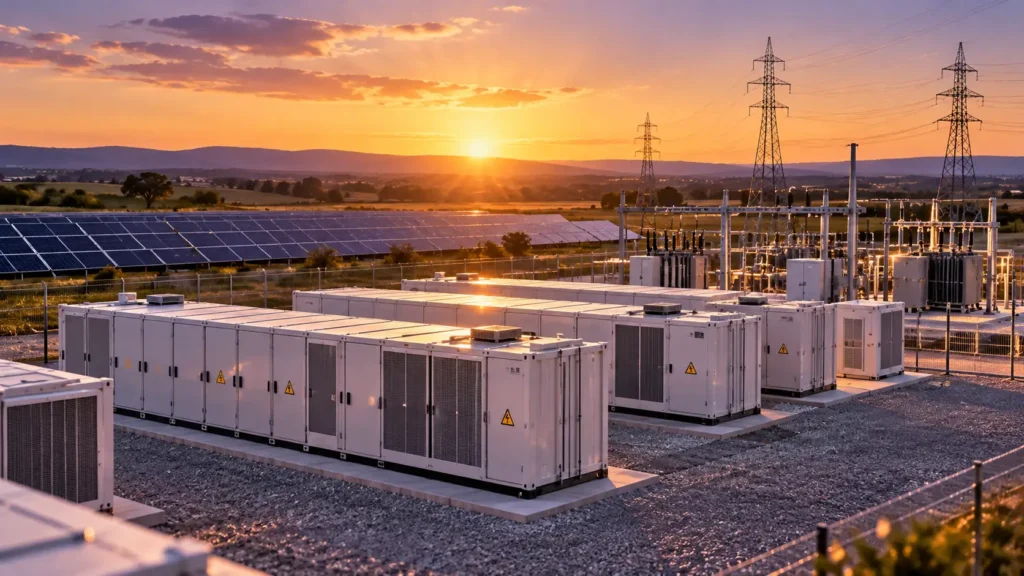
The acquisition of a project company (Special Purpose Vehicle – SPV) developing a photovoltaic park, a wind farm or a battery energy storage system (Battery Energy Storage System – BESS) may require an assessment of the CEISD authorisation requirement. The same applies where the investor directly acquires the project assets (land, rights, permits) without acquiring the company.
The assessment must take into account the transaction structure, the value of the investment, the rights and assets acquired, the sector of activity and the identity of the investor.
A transaction concerning an energy project should not be analysed solely from the perspective of building permits, land rights or grid connection.
Authorisation of the investment and authorisation of the project's development are two distinct legal matters.
For example, holding a grid connection permit (ATR), a building permit or an authorisation issued by the National Energy Regulatory Authority (ANRE) does not replace, where it is mandatory, authorisation of the investment under the CEISD regime.
For acquisitions of projects under development, the EUR 5 million threshold should not automatically be measured only against the price paid for the shares in the SPV. New investments are also covered by the regime, and interdependent transactions carried out within 12 months are aggregated. Post-acquisition stages, such as capital increases or construction financing, must be taken into account from the outset.
Timing also matters for another reason: the investment cannot be implemented before authorisation is obtained, and failure to comply with this obligation may result in fines of up to 10% of global turnover. The authorisation requirement should therefore be checked before the transaction timetable and payment terms are finalised. Where authorisation is required, obtaining it should be provided for as a condition precedent in the acquisition agreement.
This analysis is relevant both for stand-alone projects and for investments made through the acquisition of shareholdings in companies holding portfolios of energy projects.
6. Which transactions may require CEISD screening?
The authorisation requirement should not be associated exclusively with the full acquisition of a Romanian company.
Depending on the legal conditions and the structure of the transaction, the analysis may be required in the case of:
- the acquisition of shares that allow the establishment of lasting and direct links with the target company (purely financial portfolio investments are generally not covered);
- the acquisition of direct or indirect control over a company;
- the establishment of certain joint ventures;
- the acquisition of tangible or intangible assets in sensitive sectors for the purpose of carrying out an economic activity;
- new (greenfield) investments;
- changes to the control structure under the conditions laid down by law;
- successive or interdependent transactions.
GEO No. 17/2026 also introduced an exemption for certain restructuring or reorganisation transactions carried out by investors from the European Union or from states that have adhered to the OECD Codes of Liberalisation of Capital Movements. The exemption applies only if the transaction does not result in a change of effective control or of the beneficial owner, and the financing is intra-group or comes exclusively from sources in the EU or in those OECD states.
Consequently, not every intra-group reorganisation is automatically subject to authorisation, but nor can it be considered exempt without examining the legal conditions. Given the level of the fines, where the classification is uncertain, the prudent approach is to file an application for authorisation.
7. When must the authorisation application be filed? Can the agreement be signed before CEISD approval?
GEO No. 46/2022 prohibits implementing a foreign direct investment subject to authorisation before that authorisation has been obtained.
For M&A transactions, it is essential to distinguish between the signing of the agreement (signing) and the completion of the transaction (closing).
Depending on the legal structure of the transaction, the parties may sign an acquisition agreement whose completion is conditional upon obtaining CEISD authorisation. In practice, the application is usually filed after signing, when the transaction is sufficiently concrete to be assessed.
However, the agreement must be drafted so that the investment is not actually implemented before authorisation, where authorisation is mandatory.
This distinction is particularly important where the transaction involves the transfer of control, the exercise of voting rights, the granting of management rights or the early implementation of certain integration measures.
From a contractual perspective, CEISD authorisation may be structured as a condition precedent to completion of the transaction.
The parties should also agree who prepares the notification, who bears the costs, what cooperation obligations apply, what happens if additional information is requested, and what the consequences are of a conditional authorisation or a rejection of the investment.
8. How does the CEISD procedure work and how long does authorisation take?
The authorisation application is filed under the administrative mechanism established by GEO No. 46/2022, with the involvement of the CEISD Secretariat. GEO No. 17/2026 also provided for a dedicated IT application for managing authorisation applications, administered by the Prime Minister's Chancellery.
Under Article 6, applications are filed in Romanian and English and must include the information and documents required by the applicable legislation.
The application is not a mere administrative form. It must enable the authorities to assess the impact of the investment on national security and public order. The information requested typically concerns:
- the identification of the investor and of the entire chain of ownership and control, up to the natural persons exercising ultimate control;
- the sources of financing of the investment;
- a description of the transaction, its structure and the estimated timetable;
- the activity of the target company or of the assets acquired, including their relevance to sensitive sectors;
- the value of the investment and how it was calculated;
- the group's other investments in Romania or in the European Union, as well as the investor's links with third countries.
What is the statutory deadline?
As amended by GEO No. 17/2026, Article 9(21) provides for a period of no more than 45 calendar days from the date on which the notification is declared complete for the issuance of the CEISD opinion, under the conditions set out in the law.
This deadline should not be confused with the actual overall duration of the procedure.
If additional information is requested, the investor has, under Article 6(4), 30 calendar days to submit it, which may be extended by 15 days under the conditions laid down by law.
The quality of the file directly affects the length of the procedure. If the additional information is not submitted even within the 15-day extension (which brings the response period to 45 days), the screening procedure is closed and the investor must file a new application. An incomplete file can thus add months to the transaction timetable and jeopardise compliance with the long-stop date agreed in the contract.
Where, taking into account the specific nature and complexity of the application under review or its impact on national security and public order, as well as on projects and programmes of interest to the European Union, CEISD decides that the Supreme Council of National Defence must be consulted, the legislation provides for a period of 90 calendar days for an in-depth review at CEISD level, which may be extended by up to 45 days.
The authorisation order is issued by the Prime Minister's Chancellery within 10 calendar days of the communication of the favourable CEISD opinion. Conditional authorisation or rejection is ordered by Government decision.
For an investor, the transaction timetable should not be built solely around the standard 45-day period.
Time must be allowed for preparing the file, supplementing the information, the review itself and obtaining the final authorisation act.
For this reason, preparation of the application should begin in parallel with the negotiation of the transaction documents, not after signing. Information on the control structure and financing should be requested from the investor as early as the due diligence phase.
9. How much does the CEISD authorisation procedure cost?
Under the legislative amendments of March 2026, the examination fee was reduced from EUR 10,000 to EUR 5,000. The fee is paid when the authorisation application is filed, in the RON equivalent determined at the exchange rate published by the National Bank of Romania applicable on the day of payment.
The legislation also provides for situations in which the fee may be refunded, including where CEISD finds that the conditions for examining the application are not met, or in other expressly regulated situations.
The examination fee does not cover the costs of preparing the authorisation application, such as legal assistance, translation of the documentation and, where applicable, notarisation or apostille of documents issued abroad.
10. What decisions can the authorities take?
The review of the investment may lead to several outcomes, depending on the result of the assessment carried out by CEISD.
Authorisation of the investment. Where the investment does not affect security or public order and is not likely to affect projects or programmes of interest to the European Union, CEISD issues a favourable opinion. On that basis, the Prime Minister's Chancellery issues the authorisation order within 10 calendar days of the communication of the opinion.
Conditional authorisation. In certain situations, the investment may be permitted subject to compliance with certain commitments or structural or behavioural measures.
Rejection of authorisation. If relevant risks are identified that justify this outcome under the law, CEISD proposes rejection and the decision is adopted by Government decision.
The applicable regime also provides for measures to restore the previous situation in the case of investments implemented in breach of the legal obligations, in addition to fines of up to 10% of global turnover.
For the investor, conditional authorisation raises distinct contractual issues: who bears the costs of the commitments imposed, whether they affect the economic model of the investment and under what conditions the buyer may refuse to complete the transaction.
These issues should be anticipated in the contractual documentation, not negotiated for the first time after the authorities' decision has been communicated.
11. What are the risks if the investment is made without authorisation?
Failure to comply with the obligations under GEO No. 46/2022 may have significant consequences.
Financial penalties. Article 12 provides for administrative sanctions for certain breaches, including implementing an investment without the mandatory authorisation, providing inaccurate or incomplete information and failing to comply with commitments undertaken under a conditional authorisation. The fine may reach, under the conditions laid down by law, up to 10% of total worldwide turnover in the financial year preceding the sanction. For certain newly established undertakings that recorded no turnover in the year preceding the sanction, the legislation provides for fines of between RON 10,000,000 and RON 50,000,000. For a project company with no revenue, a common situation in the energy sector, this fixed range may be disproportionate to the value of the investment.
Nullity of the transaction. Furthermore, Article 12(3¹) provides that undertakings, agreements or contractual clauses through which an investment that has not been authorised in accordance with the legal requirements is made, directly or indirectly, are null and void by operation of law. The practical consequences are manifold:
- the buyer risks being unable to assert its ownership of the acquired shares or assets against third parties;
- the seller may find itself having to return the purchase price received;
- security interests created over the acquired shares or assets, for example in favour of the project lenders, may be affected;
- subsequent transactions, such as a resale, capital increases or restructurings, are built on a fragile legal basis.
Measures to restore the previous situation. The authorities may order, under the conditions laid down by law, measures to restore the situation that existed before the investment. For a project already under construction or in operation, such measures may be difficult to implement without significant losses.
The risk does not disappear after completion. An unauthorised investment remains a vulnerability throughout the holding period. It will typically be identified during due diligence for a bank financing, a refinancing or a subsequent sale of the project. Lenders and future buyers may require the situation to be remedied as a condition of the transaction, reduce the price or walk away from the deal.
The risk is therefore not purely financial. A breach of the authorisation regime may affect the very structure and legal stability of the transaction, as well as the long-term value of the investment. For this reason, checking the authorisation requirement should form part of the due diligence for any transaction, including with respect to investments previously made by the seller or by the target company.
Have you already completed an investment without checking whether authorisation was required? We review the situation and the options available before a financing, refinancing or sale of the project.
12. How should CEISD authorisation be built into the acquisition agreement?
In international transactions, the authorisation requirement should be identified before negotiations on the main transaction documents are concluded. The outcome of this analysis affects the timetable, the pricing mechanism and the allocation of risk between the parties.
Depending on the characteristics of the transaction, the acquisition agreement may need specific provisions on:
- CEISD authorisation as a condition precedent to closing;
- responsibility for preparing and filing the application;
- cooperation and information-sharing obligations;
- the deadlines for obtaining authorisation and the final date for completing the transaction (long-stop date);
- the allocation of procedural costs;
- the consequences of a conditional authorisation;
- the right to terminate the agreement if authorisation is refused;
- restrictions applicable between signing and closing;
- representations and warranties on compliance with the authorisation regime.
Where it is unclear whether the transaction falls within the scope of GEO No. 46/2022, the condition precedent may be framed in the alternative: either obtaining authorisation, or a finding by CEISD that the application does not meet the conditions for review. In this way, the parties obtain legal certainty without bearing the risk of their own interpretation.
In certain transactions, clauses may also be needed on the investor's obligation to accept or negotiate any measures imposed by the authorities. In the event of a conditional authorisation, the agreement should specify whether, and to what extent, the buyer is required to accept the measures imposed.
For a buyer, these provisions are important because they affect both deal certainty and the economic exposure assumed. For the seller, they determine how long the asset remains tied up and who bears the risk of an unfavourable outcome.
13. What should be checked before acquiring a company or a project in Romania?
A preliminary legal analysis of the applicability of the CEISD regime should cover, at a minimum, the identity of the investor and its control structure, the nature of the transaction, the sector of activity of the target company or assets, the value of the investment, the existence of any interdependent transactions and the possible application of exemptions.
For energy projects, the analysis must be aligned with the project company's documentation, the rights over the assets and the transaction structure.
If the transaction also requires a merger control notification, the two procedures must be coordinated. They run in parallel, before different authorities and with different deadlines, but rely largely on the same information about the investor and the transaction. Completion of the transaction will depend on obtaining both clearances.
The purpose of this review is not merely to identify an administrative obligation, but to establish a realistic legal timetable and to avoid contractual obligations that are incompatible with the applicable legal regime.
Conclusions
Romania offers investment opportunities in sectors such as energy, infrastructure, technology and industry. At the same time, transactions in these sectors may raise specific legal issues relating to investment screening.
The 2026 amendments make an up-to-date analysis of the CEISD authorisation requirement all the more important. The increase of the threshold to EUR 5 million and the exemption for intra-group restructurings take some transactions that previously required authorisation outside the scope of review. Conversely, the express inclusion of asset acquisitions in sensitive sectors and the rule on aggregating interdependent transactions extend the scope of review to structures that could previously have been considered exempt.
The possibility of reviewing certain investments below the EUR 5 million threshold, the inclusion of investments made by investors from the European Union and the consequences of implementation without authorisation are all factors that must be considered from the transaction structuring stage.
Moreover, the regime applies not only to investors from outside the European Union, but also to those from EU Member States and from Romania.
For investors, CEISD authorisation should not be treated as an isolated formality, but as part of the legal assessment of the investment, together with the corporate, contractual and regulatory analysis.
Identifying the applicable requirements early can help structure the transaction appropriately, allocate risks contractually and plan the steps needed to complete the investment. Failure to comply with these requirements, by contrast, may affect the very validity of the transaction.
Frequently Asked Questions (FAQ)
Is CEISD authorisation required if the investor is from the European Union or from Romania?
Yes, under the same conditions as for investors from outside the EU. Romanian legislation also covers, under the conditions laid down by law, investments made by investors from the European Union, including natural persons of Romanian citizenship and companies with their registered office in Romania. The fact that the investor is established in a Member State does not, on its own, exclude the authorisation requirement.
Does setting up an SPV in Romania exempt a foreign investor from authorisation?
No. The analysis looks at the person who directly or indirectly owns and controls the investment, not only at the Romanian company through which the investment is made.
Does a EUR 3 million investment have to be notified?
As a rule, there is no automatic obligation to file an application below the EUR 5 million threshold, but the investment is not automatically exempt. Although the general threshold is EUR 5 million, the law allows certain investments below this threshold to be reviewed, depending on their nature and potential effects, where they may affect national security or public order.
Does the acquisition of a photovoltaic park require CEISD authorisation?
In many cases, yes, depending on the transaction structure, the value of the investment and the other legal conditions, since energy is one of the sectors covered by the screening regime. Authorisation may be required both for the acquisition of the project company and for the direct acquisition of the project assets. Holding the permits required to develop the project does not replace the assessment of the CEISD requirement.
Is authorisation required for a BESS project?
The same rules apply as for other energy projects. Investments in BESS projects may raise specific screening issues, including in the context of the rules on energy infrastructure and energy storage technologies. Whether the procedure applies must be determined for the specific transaction.
Who files the authorisation application: the buyer or the seller?
The obligation to obtain authorisation lies with the investor, i.e. the buyer. The seller and the target company usually provide part of the necessary information, and their cooperation obligations should be set out in the acquisition agreement.
How long does CEISD authorisation take in Romania?
The law provides for a general period of no more than 45 calendar days for the issuance of the CEISD opinion from the date on which the notification is declared complete, under the statutory conditions. The overall duration may be longer, depending on the completion of the documentation, any in-depth review and the other applicable stages. The procedure may be significantly extended where additional information is requested (30 days, which may be extended by a further 15 days) or where an in-depth review involving consultation of the CSAT is carried out (up to 90 days, which may be extended by a further 45 days).
Can a single application be filed for several transactions?
Yes. For similar or interdependent transactions carried out within one year between the same parties and concerning the same entity, the investor may file a single authorisation application.
How much does it cost to file an application with CEISD?
The examination fee is EUR 5,000, payable in the RON equivalent at the National Bank of Romania exchange rate on the day of payment. The costs of legal assistance and of preparing the documentation are separate.
Can the acquisition be completed before authorisation is obtained?
No. An investment subject to authorisation may not be implemented before authorisation has been obtained. The acquisition agreement must be structured accordingly, including through conditions precedent where necessary. Failure to comply with this obligation may result in fines of up to 10% of global turnover and the nullity of the acts through which the investment was made.
Is Competition Council clearance sufficient for a merger?
No. Authorisation of the investment under GEO No. 46/2022 and merger control clearance are separate procedures, and one does not replace the other. Where both apply, completion of the transaction depends on obtaining both.
Adesman & Asociații provides legal assistance to investors and companies involved in transactions and investment projects in Romania, including in the energy and infrastructure sectors. The firm's work includes legal analysis of projects, contractual structuring, regulatory matters and representing clients' interests in legal relationships relevant to their investments.
Not sure whether your transaction requires CEISD authorisation? We analyse the control structure, value and sector of the investment and tell you whether an application must be filed, before you set the transaction timetable and payment terms.
Request a preliminary assessment →This material is general and informative in nature and does not constitute individual legal advice. The applicability of authorisation requirements must be assessed based on the specific characteristics of each investment and the legislation in force at the time of the analysis.