Renewable Energy Investments in Romania: Legal Guide
22 September 2026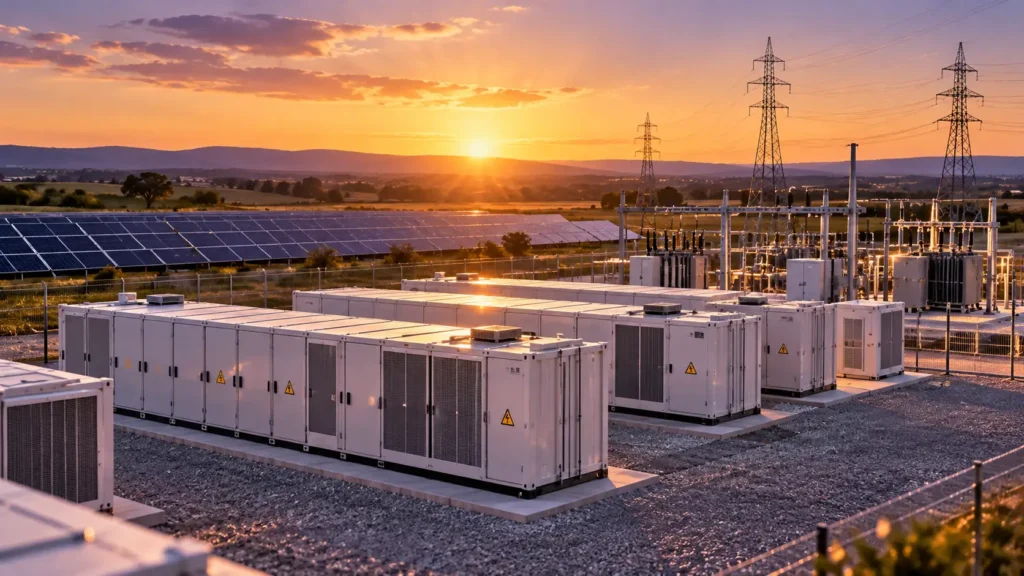
BESS Projects in Romania: Legal Risks and Opportunities for Investors
In recent years, BESS projects in Romania have become increasingly relevant to investments in the energy sector. Battery Energy Storage Systems (BESS) play an important role in improving the flexibility of the electricity system.
The expansion of renewable energy generation capacity, grid constraints and the growing need for flexibility within the electricity system are creating significant opportunities for energy storage projects, both as independent facilities (stand-alone BESS) and alongside electricity generation facilities, particularly solar photovoltaic and wind projects (co-located BESS).
From a legal perspective, however, securing land and establishing a technical configuration are not sufficient for a BESS project to be considered viable for development or ready for construction (ready-to-build).
The legal viability of a project depends on several interconnected factors: land and access rights, planning requirements, grid connection arrangements, the capacity to import electricity from and export electricity to the grid (bidirectional operation), ANRE authorisations, technical requirements, environmental and fire safety obligations, and the intended operating model.
For investors acquiring projects under development, the essential question is therefore not merely which documents the project holds, but whether those documents actually allow the BESS facility to be constructed and operated in the intended technical and commercial configuration.
1. Land Rights and Site Selection for BESS Projects
The first stage of the legal assessment concerns land rights.
Investors must verify not only the existence of a legal title to the land (ownership, superficies rights, concession rights or another right in rem), but also whether its duration, scope and terms are sufficient for the development, construction and operation of the project, including site access and the routing of grid connection lines.
Particular attention should be paid to agricultural land located outside built-up areas.
Can a BESS Facility Be Developed on Agricultural Land Outside Built-Up Areas?
Under certain conditions, yes. Romanian Land Law No. 18/1991 expressly includes electricity storage facilities among the installations that may be located on agricultural land outside built-up areas. Such facilities fall within the category of investments associated with electricity generation from renewable sources, alongside solar, wind, biomass, bioliquid and biogas generation facilities, transformer substations and similar systems, subject to a maximum land area of 50 hectares.
However, the general regime under Article 92(2)(j) of Land Law No. 18/1991 must also be assessed by reference to the land's use category and quality class, the project's surface area and the procedure for removing the land from agricultural use.
Legal due diligence should examine, among other matters, the land title and its registration in the Romanian Land Register, encumbrances and potential disputes, the duration of the rights granted, site access, easements required for cables and grid connection infrastructure, and consistency between the cadastral position, planning status and technical configuration of the project.
2. Connecting BESS Projects to the Electricity Grid
For many BESS projects, grid connection is one of the principal factors determining the value of the project.
Unlike an electricity generation facility, an energy storage system can both import electricity from the grid and export electricity back into it.
Accordingly, the mere existence of a Technical Grid Connection Approval (Aviz Tehnic de Racordare – ATR) or a grid connection agreement is not sufficient for the legal assessment of the project.
It is necessary to examine precisely what the approved grid connection solution permits: the approved import and export capacities, the connection point and voltage level, any required grid reinforcement works and which party bears their costs (the grid user or the network operator), any technical conditions or limitations imposed, and the implementation timetable.
For an investor acquiring a BESS project, any discrepancy between the capacity presented commercially and the capacity actually permitted under the grid connection documentation may have a direct impact on the value of the investment.
3. Grid Capacity and Development Risk
Against the background of the rapid increase in the number of energy projects seeking grid connection, effective access to the electricity grid has become a central component of development risk.
A project may have secured land, established a corporate structure and even obtained a substantial part of its permits without any guarantee that it can be developed and operated at the capacity assumed in the investor's financial model.
For this reason, the legal assessment of grid connection must be conducted alongside the technical assessment.
In a transaction involving a BESS project, grid connection documentation should not be treated merely as another item on a due diligence checklist, but as one of the documents defining the very subject matter of the acquisition.
4. Planning and Construction Permits
Developing a BESS facility also requires compliance with the applicable planning and construction permitting procedures.
Is a Construction Permit Sufficient for a BESS Project to Commence Commercial Operation?
No. A construction permit represents only one stage of the permitting process. It authorises the execution of construction works but does not, by itself, authorise the commercial operation of the facility.
Depending on the circumstances, commencement of operations may also require formal acceptance of the completed construction works and registration in the Land Register, energisation and issuance of the grid connection certificate, as well as the relevant authorisations and licences issued by ANRE.
Depending on the characteristics of the project and its location, the urban planning certificate, the approvals and consents required under it, the legal status of the land, the technical documentation, the construction permit and other applicable sector-specific approvals must be consistent with one another.
Legal due diligence must also establish whether the permits already obtained correspond to the BESS configuration that will actually be constructed. Subsequent changes to installed power, the technology used, equipment layout or grid connection infrastructure may require the existing permits to be amended or the relevant permitting procedures to be repeated.
5. ANRE Establishment Authorisations and Licensing
Romanian Electricity and Natural Gas Law No. 123/2012 expressly regulates electricity storage facilities within the authorisation and licensing framework applicable to the electricity sector.
Is an ANRE Establishment Authorisation Required for a BESS Project?
For the development of a new electricity storage facility, where the maximum electrical power exported to the grid exceeds 1 MW, the law requires an establishment authorisation to be obtained.
For facilities with a capacity of 1 MW or less, an establishment authorisation is not required. However, notification and periodic reporting obligations apply under the relevant ANRE regulations.
Separately, Law No. 123/2012 includes the commercial operation of electricity storage facilities among the activities subject to ANRE licensing and distinguishes between storage facilities associated with electricity generation capacity and other storage facilities.
This distinction is particularly relevant when comparing stand-alone BESS projects with storage systems integrated into existing electricity generation projects.
6. Commissioning and Technical Compliance
Completion of construction works does not automatically mean that the facility can commence commercial operation.
Commissioning requires the construction documentation to be aligned with the technical requirements applicable to the facility's grid connection and operation within the electricity system.
For investors, it is important that the due diligence process distinguishes between:
- installed power capacityinstalled power capacity
- authorised power capacity
- energy storage capacity (MWh) and discharge duration
- approved power capacity for electricity import from the grid
- approved power capacity for electricity export to the grid
- the power and energy that can actually be commercially utilised
These values should not be assumed to be identical. Any discrepancies between them must be identified and assessed in terms of their potential impact on the project's revenue.
7. Environmental and Fire Safety Requirements
BESS facilities have a different technical risk profile from solar photovoltaic or wind farms, particularly in relation to battery-related hazards.
Pe lângă impactul obișnuit al unei construcții energetice, există riscuri specifice bateriilor: propagarea/instabilitatea termică și propagarea incendiului între module sau containere, emisia de gaze toxice în caz de incendiu, posibila contaminare a solului și a apelor cu electrolit sau cu apa folosită la stingere, precum și zgomotul generat de sistemele de răcire și de invertoare.
The need for, and scope of, environmental permitting procedures must be determined by reference to the specific characteristics of the project and its location, including its power rating and energy storage capacity, the land area occupied, and its proximity to residential areas or protected natural sites.
From a transactional perspective, it is necessary to verify whether the environmental approval or other document issued by the competent environmental authority corresponds to the project's current configuration and whether it imposes conditions affecting construction or operation, such as water collection measures, monitoring requirements or noise limits.
Similarly, fire safety requirements must be assessed in light of the battery technology used, the configuration and positioning of the containers, the required safety distances from neighbouring properties and between equipment, emergency access routes, and the availability of water supplies for firefighting.
From a transactional perspective, these matters should not automatically be deferred until the construction stage. A technical configuration that does not comply with the applicable requirements may affect the usable land area and the project layout and, ultimately, limit the power rating and energy storage capacity that can be installed.
For investors, a project layout that has not been assessed against these requirements represents a risk of reduced project capacity, rather than merely an administrative formality.v
8. Stand-Alone BESS vs. Co-Located BESS
The distinction between these two models has direct legal implications for permitting, grid connection and transaction structuring.
A stand-alone BESS is developed as an independent energy storage facility, with its own land, grid connection point and permitting, licensing and operational arrangements.The advantage lies in its independence: the project can be acquired or sold, financed and operated separately.
A co-located BESS is developed alongside an electricity generation facility, such as a solar photovoltaic plant, and may use all or part of its existing infrastructure, including the land, access roads, transformer substation and grid connection point. This model may reduce costs and development timelines, but introduces additional complexity in ensuring consistency with the existing documentation of the electricity generation project.
In the latter case, the legal assessment must determine whether the addition of the energy storage system is compatible with the existing rights and permits, and what amendments are required to the grid connection, permitting and licensing documentation.
The fact that a solar photovoltaic plant has already obtained its permits or been connected to the grid does not automatically mean that a BESS can be added without amending the existing documentation.
9. When Is a BESS Project Truly Ready-to-Build (RTB)?
The term ready-to-build (RTB) is frequently used in energy sector transactions, but it should not be treated merely as a commercial label.
From a legal perspective, a project can be considered ready-to-build only if all necessary documents and rights have been obtained and verified cumulatively, with reference to the specific technical configuration intended to be constructed.
In the case of a BESS project, this involves verifying, in particular:
- land and access rights, their enforceability against third parties (through registration in the Land Register) and their duration
- planning requirements and a valid construction permit
- grid connection arrangements, including a valid Technical Grid Connection Approval (ATR) and grid connection agreement, with approved power capacity for both electricity import and export
- the ANRE establishment authorisation
- the document issued by the environmental authority and compliance with fire safety requirements
- consistency between the legal documentation and the technical configuration
- any conditions precedent, validity periods or risks that may affect project implementation, including potential litigation and challenges
Accordingly, in a transaction, RTB should be expressly defined in the contract, rather than merely referred to. Without such a definition, RTB remains a commercial representation made by the seller, and the risk of discrepancies between what was promised and what the project documentation actually permits is transferred to the purchaser.
10. Due Diligence When Acquiring a BESS Project
What Should Be Verified Before Acquiring a BESS Project in Romania?
The due diligence process must address a broader question than merely whether the project company holds certain documents.
The investor must be able to determine whether the acquired project can be constructed, connected to the grid and operated within the economic parameters underpinning the investment decision.
The assessment should cover, at a minimum:
Corporate matters – the structure of the project company (SPV), its share capital, ownership structure, ongoing contracts and any encumbrances over the shares or the company's assets.
Land – title, duration of rights, encumbrances, access and easements.
Grid connection – the Technical Grid Connection Approval (ATR) and other grid connection documents, approved power capacities for electricity import and export, any required grid reinforcement works and implementation deadlines.
Permitting – planning documentation, the construction permit, environmental approvals and other relevant permits and endorsements.
ANRE regulatory requirements – the establishment authorisation, applicable notifications and licences.
Consistency between legal and technical documentation – whether the technical configuration presented to the investor corresponds to the configuration actually authorised.
Project contracts – the Engineering, Procurement and Construction (EPC) contract, equipment supply agreement, Operation and Maintenance (O&M) agreement, grid connection agreement and other material contracts, where applicable.
For projects acquired before reaching RTB status, the sale and purchase agreement should expressly allocate development risks and precisely define the development milestones upon which payment of the purchase price or the economic transfer of the project depends.
Conclusions
The Romanian BESS market offers significant opportunities, but the value of an energy storage project cannot be assessed solely on the basis of its nominal power rating and energy storage capacity (expressed in MW/MWh).
For investors, the project's actual value depends on whether the land rights, grid connection arrangements, obtained permits and technical configuration are mutually consistent and enable the facility to be operated commercially. This includes access to the electricity markets and ancillary services underpinning the project's revenue.
Particularly in transactions involving projects under development, the gap between a project marketed as ready-to-build (RTB) and one that can actually be constructed, connected to the grid and operated in the promised configuration may become a major source of risk.
For this reason, the legal assessment should begin sufficiently early to ensure that any discrepancies can be addressed through the transaction structure, conditions precedent, pricing mechanism, seller's representations and warranties, and indemnification obligations.
Frequently Asked Questions (FAQ)
Can a BESS Be Built on Agricultural Land Outside Urban Areas in Romania?
Yes, subject to certain conditions. Land Law No. 18/1991 expressly includes electricity storage facilities among the installations that may be developed on agricultural land outside urban areas. However, the land-use category, land quality classification, occupied area and procedures for removing the land from agricultural use must be assessed.
Is a Technical Grid Connection Approval (ATR) Required for a BESS Project?
Yes. Like any facility intended to be connected to the electricity grid, a BESS requires a Technical Grid Connection Approval (ATR) issued by the relevant grid operator. The ATR is followed by the conclusion of a grid connection agreement.
Where a BESS is co-located with an existing electricity generation facility, the existing ATR will generally need to be updated.
Is an ANRE Authorisation Required?
Yes. Under Electricity and Natural Gas Law No. 123/2012, a prior establishment authorisation is required for new energy storage facilities whose maximum electrical power exported to the grid exceeds 1 MW.
For facilities with a capacity of 1 MW or less, an establishment authorisation is not required. However, notification of the investment project to ANRE and periodic reporting on its implementation progress are mandatory.
Does a BESS Require a Licence for Commercial Operation?
As a general rule, yes. Electricity and Natural Gas Law No. 123/2012 subjects energy storage to a licensing regime and distinguishes between two situations:
(i) a BESS added to an electricity generation facility (co-located BESS), where commercial operation of the storage facility is covered by the licence held for the generation facility to which it is added; and
(ii) an independent BESS (stand-alone BESS) , where a separate licence is required for the commercial operation of the energy storage facility.
By way of exception, no licence is required for electricity generation facilities and/or energy storage facilities with a total electrical power capacity of less than 1 MW. However, their operators remain subject to the same obligations to comply with ANRE regulations as licence holders.
What Is the Difference Between Stand-Alone and Co-Located BESS?
A stand-alone BESS is an energy storage facility connected directly to the electricity grid, with its own grid connection point and its own permitting and licensing requirements.
A co-located BESS is added to an electricity generation facility, typically a solar photovoltaic or wind farm, and uses all or part of its infrastructure, including the land, transformer substation and grid connection point.
This distinction may affect grid connection, permitting and licensing requirements.
What Should Be Checked When Acquiring a BESS Project?
The due diligence assessment must establish whether the project can be constructed, connected to the grid and operated within the parameters underpinning its purchase price. The assessment should primarily cover:
- the project company's corporate structure and any existing encumbrances;
- land rights, access and easements;
- grid connection arrangements, including the approved power capacities for electricity import and export;
- planning and construction permits, environmental approvals and fire safety requirements;
- ANRE regulatory requirements, including the establishment authorisation and operating licence;
- project contracts;
- validity periods, applicable conditions and any potential litigation;
- consistency between the power rating and energy storage capacity presented commercially and those actually authorised.
What Does “Ready-to-Build” (RTB) Mean for a BESS Project?
In practice, a project is considered ready-to-build when it has all the rights and permits required to commence construction works, including valid land rights, a Technical Grid Connection Approval (ATR) and grid connection agreement, a construction permit and, where applicable, an ANRE establishment authorisation. All these documents and rights must correspond to the technical configuration intended to be constructed.
However, the term has no statutory definition. Therefore, in a transaction, RTB status must be contractually defined by specifying the documents, rights and development milestones that the project must satisfy.
Is Capacity Expressed in MW/MWh Sufficient to Assess a BESS Project?
No. Nominal ratings indicate only the size of the project, not what can actually be constructed and operated.Nominal ratings indicate only the size of the project, not what can actually be constructed and operated.
Trebuie analizate puterile aprobate prin documentația de racordare pentru absorbție și injecție, autorizațiile obținute și concordanța lor cu configurația tehnică, precum și posibilitatea exploatării comerciale efective în parametrii economici care au fundamentat investiția.
Adesman & Associates advises investors and developers on renewable energy and energy storage projects, including project development, grid connection and permitting, as well as due diligence processes and transactions involving energy projects.
Pentru informații suplimentare privind activitatea și serviciile noastre juridice, puteți consulta pagina de contact.
This material is provided for general informational purposes only and does not constitute legal advice in relation to any specific project or transaction. The applicable legal framework must be assessed in light of the specific characteristics of each project and the legislation in force at the time of the assessment, given that both legislation and regulatory practice in the energy sector are continuously evolving.